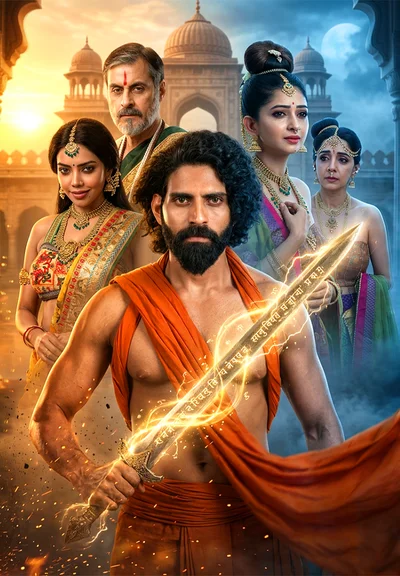
Maa Naanna Maha Yodha
Maa Naanna Maha Yodha
The story unfolds as a sweeping clash between supernatural invasion and human loyalty, with kingdoms, families, and hidden identities all under pressure. It begins in crisis, as a royal stronghold is shaken by strange attacks, explosions, and the reopening of a sealed evil force. A demon army led by Mahandhakudu devastates the land, and King Raja’s defenders struggle to hold the line. Hope repeatedly turns toward Vishwaguru, the legendary protector who once imprisoned the demon king and later returns to stand with humanity. As the war grows, princes, soldiers, sages, and commanders are pulled into a larger struggle where even spiritual power may not be enough. Alongside the battlefield conflict, the story moves into courtly tension, where Devavarma, ministers, priests, and rulers clash over protocol, authority, and hidden power. Garuda becomes a central figure in this pressure, first as a warrior-prince trying to protect his father and later as a reluctant leader forced to choose duty over personal longing. His bond with his father is strained by class, pride, and public humiliation, especially when low birth and farming roots are exposed in front of royal circles. Tara’s arrival sharpens the emotional and political stakes, since she is treated as royal-blooded and far above Garuda’s station, yet she still listens to him with calm authority. Their connection remains unresolved, and Garuda’s feelings are repeatedly tested by family pressure and court scrutiny. The narrative also introduces hidden inheritance, secret investigations, and bargains over wealth, showing that greed and exploitation threaten families as much as armies do. Public events such as auctions and ceremonial gatherings become arenas where status, honor, and loyalty are openly judged. In these spaces, paintings, relics, and invitations are not just objects but tests of worth and legitimacy. The story keeps returning to fathers and sons, with several relationships marked by conflict, sacrifice, or refusal to abandon duty. Vishwaguru’s role deepens from legendary savior to divine warrior, and his confrontation with the demon foe becomes tied to prophecy and long-buried grudges. The emotional center widens when family truth is revealed, including a father confronting his son and offering home and power, only to be refused because the people remain in danger. By the later episodes, the kingdom faces renewed demon attacks, curses, and battlefield instability, while defenders rally around Garuda and other protectors. The overall arc is one of escalating siege, where personal identity, lineage, and love are constantly measured against the need to protect the realm. Even when victory remains uncertain, the defenders refuse to kneel, and the show closes on a world still under threat but held together by duty and sacrifice.
- A
- Series
- telugu