•2026•71 Episodes•729K+
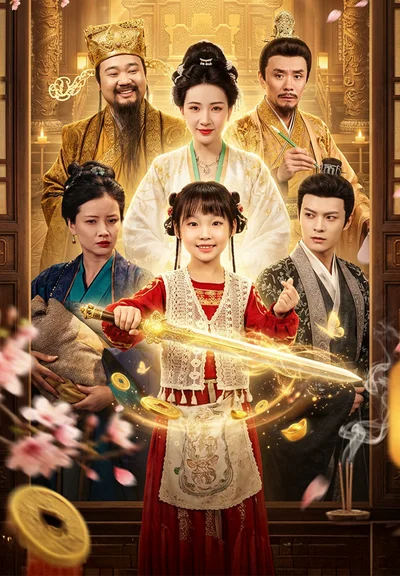
Gunbao begins as a mischievous minor goddess sent to Earth for one last chance to earn merit by helping humans. Her early efforts are comic and chaotic, but they quickly pull her into human suffering, temple superstition, and household danger. She meets desperate devotees, sees how dangerous medicine and fertility fears can be used against women, and is repeatedly protected by kind women who treat her with warmth. As she grows closer to mortal lives, she also gains supernatural ways of hearing secrets, which draws her into powerful households full of gossip, betrayal, and hidden manipulation. The story broadens from divine mischief into a sustained struggle over marriage, legitimacy, and inheritance. Wives are displaced by second marriages, children are threatened, and household elders use decrees, punishment, and poison to preserve control. Several women are forced to confront husbands who have taken other wives, hidden children, or denied them status, and these confrontations turn homes into battlegrounds. Gunbao and other vulnerable figures keep getting caught between public rumor and private cruelty. In the court, a divine warning about a second marriage is ignored, and the result is supernatural chaos that mirrors the human disorder below. The palace becomes a place where status can be rewritten by decree, but also where those decrees create humiliation, jealousy, and revenge. Gunbao’s own identity becomes tied to larger questions of belonging, as her mother’s background and her connection to the ruler are gradually revealed. At the same time, rumors that she is cursed or inauspicious threaten to separate her from her mother and make her a target of public fear. Her mother repeatedly defends her as a divine child and seeks protection from higher authority. The court and family plots then deepen into accusations about hidden parentage, forced deliveries, buried children, and old scandals that were never truly resolved. Some women are publicly shamed for supposed affairs or illegitimacy, while others fight to clear their names and protect their children. Across these conflicts, the same pattern repeats: powerful families try to control women through marriage, ritual, and reputation, while the women resist with truth, anger, and endurance. By the end, the central stakes are no longer only whether Gunbao earns merit, but whether she and the other women can keep their agency, their children, and their place in the world. The final resolution is gentle for Gunbao herself, as she is allowed to remain with her mother while still fulfilling her sacred duty from afar.
Gunbao begins as a mischievous minor goddess sent to Earth for one last chance to earn merit by helping humans. Her early efforts are comic and chaotic, but they quickly pull her into human suffering, temple superstition, and household danger. She meets desperate devotees, sees how dangerous medicine and fertility fears can be used against women, and is repeatedly protected by kind women who treat her with warmth. As she grows closer to mortal lives, she also gains supernatural ways of hearing secrets, which draws her into powerful households full of gossip, betrayal, and hidden manipulation. The story broadens from divine mischief into a sustained struggle over marriage, legitimacy, and inheritance. Wives are displaced by second marriages, children are threatened, and household elders use decrees, punishment, and poison to preserve control. Several women are forced to confront husbands who have taken other wives, hidden children, or denied them status, and these confrontations turn homes into battlegrounds. Gunbao and other vulnerable figures keep getting caught between public rumor and private cruelty. In the court, a divine warning about a second marriage is ignored, and the result is supernatural chaos that mirrors the human disorder below. The palace becomes a place where status can be rewritten by decree, but also where those decrees create humiliation, jealousy, and revenge. Gunbao’s own identity becomes tied to larger questions of belonging, as her mother’s background and her connection to the ruler are gradually revealed. At the same time, rumors that she is cursed or inauspicious threaten to separate her from her mother and make her a target of public fear. Her mother repeatedly defends her as a divine child and seeks protection from higher authority. The court and family plots then deepen into accusations about hidden parentage, forced deliveries, buried children, and old scandals that were never truly resolved. Some women are publicly shamed for supposed affairs or illegitimacy, while others fight to clear their names and protect their children. Across these conflicts, the same pattern repeats: powerful families try to control women through marriage, ritual, and reputation, while the women resist with truth, anger, and endurance. By the end, the central stakes are no longer only whether Gunbao earns merit, but whether she and the other women can keep their agency, their children, and their place in the world. The final resolution is gentle for Gunbao herself, as she is allowed to remain with her mother while still fulfilling her sacred duty from afar.
The Miracle I Found is a Mythology Series in Hindi, streaming on Kuku TV.
The Miracle I Found has 71 episodes, watched over 729K+ times on Kuku TV.
The Miracle I Found is available to watch in Hindi on Kuku TV.
The Miracle I Found was released in 2026 and is streaming on Kuku TV.
The Miracle I Found is rated A.
The cast of The Miracle I Found includes Abha Dixit and Ishwara Productions.
You can watch The Miracle I Found online on Kuku TV or download the Kuku TV app to start playing. Open any episode above to start watching instantly.