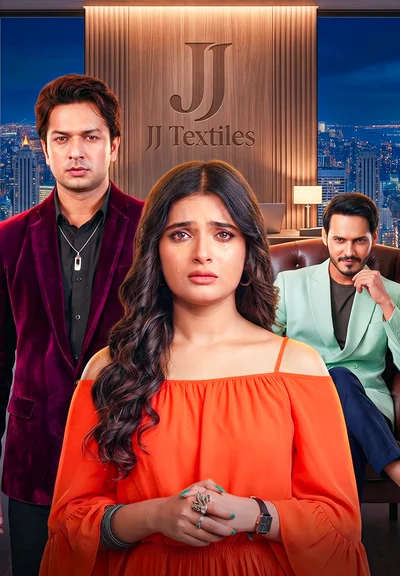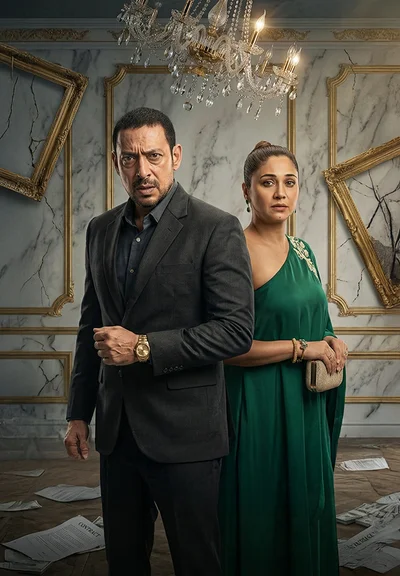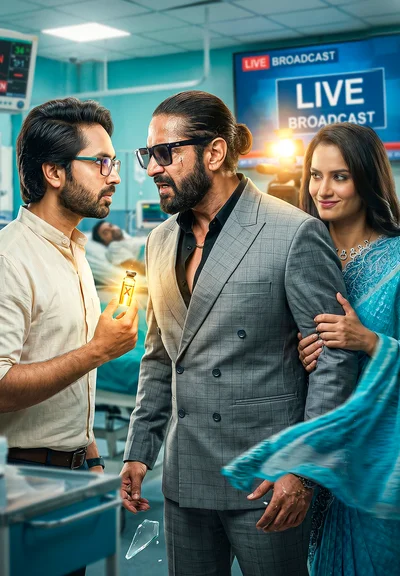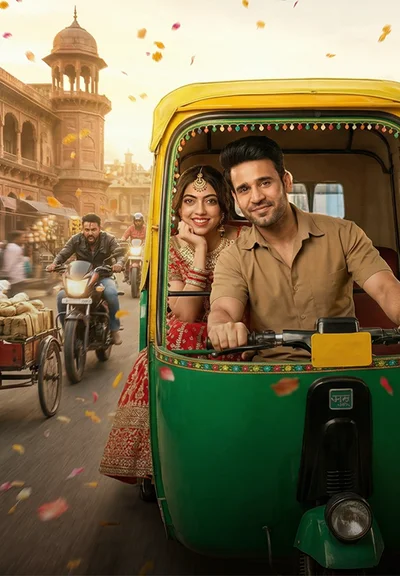
This microdrama centers on Ananya, a defiant heiress who refuses to let her family, wealthy suitors, or corporate interests decide her future, and on Vihan, a man repeatedly dismissed as a mere rickshaw driver even as he becomes the key to her freedom and the fate of Star Drive. Their story begins in chaos, with public proposals, refusals, threats, and violence turning romance into a crisis of survival. As Ananya resists a forced marriage and insists on choosing love for herself, Vihan is pulled through chases, beatings, humiliation, and relentless pressure from powerful households and enforcers. The relationship remains unstable at first, partly because identities and loyalties are unclear, and partly because family honor and business strategy are tightly bound together. A recurring five-lakh cheque deepens the class conflict by making working-class men like Shyam and Vihan targets of suspicion, public shaming, and even police scrutiny. Through these cheque disputes and family confrontations, the show repeatedly exposes how quickly poor men are treated as thieves, impostors, or opportunists when they enter elite spaces. At the same time, some elders and household members begin to soften, creating a divided family landscape in which acceptance and rejection coexist uneasily. Ananya continues to choose independence over obedience, even when threatened with disinheritance, and she turns toward building her own startup rather than inheriting power on someone else’s terms. Vihan’s position grows more complicated as he is mocked for claiming authority, challenged to prove who he is, and forced to defend both his love and his legitimacy. What first looks like deception gradually becomes a larger revelation: the supposed outsider and rickshaw driver is tied to the highest levels of Star Drive and has concealed real power. This hidden identity transforms the central conflict from a romance across class lines into a battle over authorship, ownership, and who truly built the company’s future. Dhruv and other rivals try to weaponize status, marriage arrangements, and accusations of fraud to secure the Star Drive deal and push Vihan out. But public hearings, auctions, launches, and boardroom clashes steadily reverse the humiliation, as Vihan proves his authority through business cards, investment backing, control of the prototype, and finally the unmasking of his role as Vihan Chopra, the hidden leader behind Star Drive. Alongside this corporate war, Ananya’s emotional arc also matures: she stops wavering between pressure and desire and openly commits herself to Vihan and to a self-made future. Their bond is increasingly framed not as rebellion alone but as a partnership, with Vihan funding and supporting her ambitions while she stands by him against family and corporate attacks. The stakes peak around control of Star Drive’s next-generation technology, with Vihan refusing to surrender it under pressure and tying that refusal to principle, legacy, and a deceased parent’s dream. As rivals are disgraced and the truth about power inside the company comes into the open, the older generation is forced to confront its own greed, prejudice, and misuse of marriage as leverage. By the end, repentance replaces some of the earlier coercion: a patriarch admits past wrongdoing, apologizes to both Ananya and Vihan, and formally approves their union. The overall arc fuses romance, class prejudice, hidden identity, and corporate succession into a story where love survives only by defeating both social humiliation and a struggle for industrial control.
This microdrama centers on Ananya, a defiant heiress who refuses to let her family, wealthy suitors, or corporate interests decide her future, and on Vihan, a man repeatedly dismissed as a mere rickshaw driver even as he becomes the key to her freedom and the fate of Star Drive. Their story begins in chaos, with public proposals, refusals, threats, and violence turning romance into a crisis of survival. As Ananya resists a forced marriage and insists on choosing love for herself, Vihan is pulled through chases, beatings, humiliation, and relentless pressure from powerful households and enforcers. The relationship remains unstable at first, partly because identities and loyalties are unclear, and partly because family honor and business strategy are tightly bound together. A recurring five-lakh cheque deepens the class conflict by making working-class men like Shyam and Vihan targets of suspicion, public shaming, and even police scrutiny. Through these cheque disputes and family confrontations, the show repeatedly exposes how quickly poor men are treated as thieves, impostors, or opportunists when they enter elite spaces. At the same time, some elders and household members begin to soften, creating a divided family landscape in which acceptance and rejection coexist uneasily. Ananya continues to choose independence over obedience, even when threatened with disinheritance, and she turns toward building her own startup rather than inheriting power on someone else’s terms. Vihan’s position grows more complicated as he is mocked for claiming authority, challenged to prove who he is, and forced to defend both his love and his legitimacy. What first looks like deception gradually becomes a larger revelation: the supposed outsider and rickshaw driver is tied to the highest levels of Star Drive and has concealed real power. This hidden identity transforms the central conflict from a romance across class lines into a battle over authorship, ownership, and who truly built the company’s future. Dhruv and other rivals try to weaponize status, marriage arrangements, and accusations of fraud to secure the Star Drive deal and push Vihan out. But public hearings, auctions, launches, and boardroom clashes steadily reverse the humiliation, as Vihan proves his authority through business cards, investment backing, control of the prototype, and finally the unmasking of his role as Vihan Chopra, the hidden leader behind Star Drive. Alongside this corporate war, Ananya’s emotional arc also matures: she stops wavering between pressure and desire and openly commits herself to Vihan and to a self-made future. Their bond is increasingly framed not as rebellion alone but as a partnership, with Vihan funding and supporting her ambitions while she stands by him against family and corporate attacks. The stakes peak around control of Star Drive’s next-generation technology, with Vihan refusing to surrender it under pressure and tying that refusal to principle, legacy, and a deceased parent’s dream. As rivals are disgraced and the truth about power inside the company comes into the open, the older generation is forced to confront its own greed, prejudice, and misuse of marriage as leverage. By the end, repentance replaces some of the earlier coercion: a patriarch admits past wrongdoing, apologizes to both Ananya and Vihan, and formally approves their union. The overall arc fuses romance, class prejudice, hidden identity, and corporate succession into a story where love survives only by defeating both social humiliation and a struggle for industrial control.
Rickshaw Wale Ki Dulhaniya is a Crime Series in Hindi, streaming on Kuku TV.
Rickshaw Wale Ki Dulhaniya has 45 episodes, watched over 4M+ times on Kuku TV.
Rickshaw Wale Ki Dulhaniya is available to watch in Hindi on Kuku TV.
Rickshaw Wale Ki Dulhaniya was released in 2026 and is streaming on Kuku TV.
Rickshaw Wale Ki Dulhaniya is rated A.
The cast of Rickshaw Wale Ki Dulhaniya includes Monika Agarwal, Satvik Pathak, Silver Rain Pictures, and Nidhi Wadhwa.
You can watch Rickshaw Wale Ki Dulhaniya online on Kuku TV or download the Kuku TV app to start playing. Open any episode above to start watching instantly.