•2026•48 Episodes•204K+
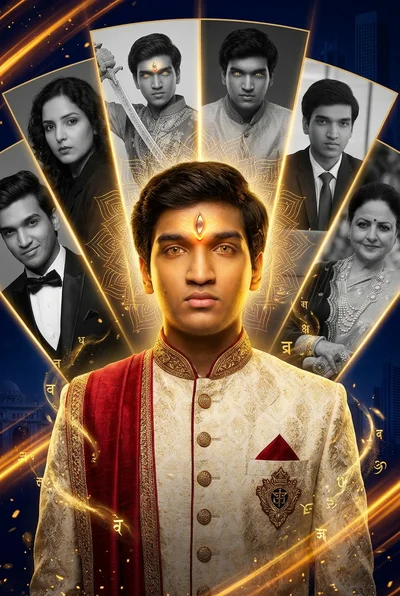
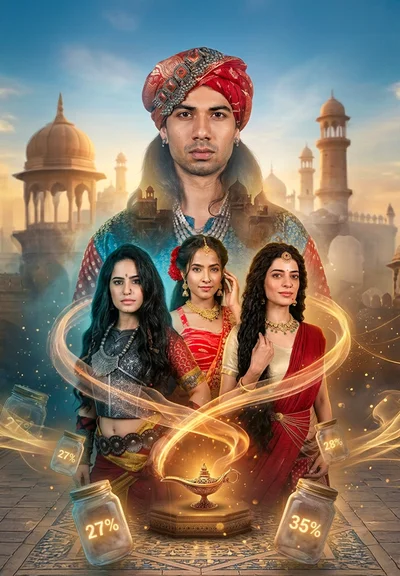
Deva and Devan are drawn into a single escalating struggle where sacred destiny, family pressure, and public humiliation all collide. At first, Deva is forced back into mortal life after failing his penance and is told he must recover three sacred weapons within ninety days. Around him, a stolen locket, the Pancha Padma Vyooham, and the Indrajala Vaal all point toward a hidden inheritance that others also want to control. He is mocked as an outsider, yet he keeps being pulled into rituals, trials, and councils that seem designed to expose whether he is truly chosen. Family life is equally unstable, with elders choking, remedies failing, and mothers or guardians accepting humiliation to protect vulnerable relatives. Several people use blackmail, threats, and public shame to force surrender, including demands tied to company control, compensation, and obedience. Deva repeatedly resists being reduced to a weak or unworthy figure, even when crowds, rivals, and enforcers try to break him. A series of public tests and weapon trials gradually shift the story from doubt to recognition, suggesting that supernatural power has already marked him. He is first treated as an outsider, but later he lifts an impossible sacred sword and is acknowledged as the chosen one. That recognition does not end the conflict; instead, it deepens the stakes as rivals contest his legitimacy and try to trap or punish him. The story also widens into corporate and social warfare, where a cosmetics crisis, accusations, and product testing become another battlefield for trust and control. Deva steps in as a practical defender in that arena, while Sridevi proves faith in the product by testing it herself. Meanwhile, other figures maneuver around relics, auctions, and broken objects, turning family disputes into struggles over fate and authority. Devan’s rise from ridicule to chosen status shocks those who opposed him and forces allies and enemies alike to choose sides. His defiance grows into open confrontation with rulers, secret societies, and divine authorities. He refuses to kneel, lifts the legendary Vajragadha, and proves that legitimacy cannot simply be claimed by force. The conflict then expands into revenge, with his parents’ murder, his mother’s danger, and attacks by powerful enemies pushing him toward a larger reckoning. By the end, the story is no longer just about one weapon or one family, but about whether Devan can survive the combined pressure of mortal power, sacred judgment, and a destiny that keeps demanding more.
Deva and Devan are drawn into a single escalating struggle where sacred destiny, family pressure, and public humiliation all collide. At first, Deva is forced back into mortal life after failing his penance and is told he must recover three sacred weapons within ninety days. Around him, a stolen locket, the Pancha Padma Vyooham, and the Indrajala Vaal all point toward a hidden inheritance that others also want to control. He is mocked as an outsider, yet he keeps being pulled into rituals, trials, and councils that seem designed to expose whether he is truly chosen. Family life is equally unstable, with elders choking, remedies failing, and mothers or guardians accepting humiliation to protect vulnerable relatives. Several people use blackmail, threats, and public shame to force surrender, including demands tied to company control, compensation, and obedience. Deva repeatedly resists being reduced to a weak or unworthy figure, even when crowds, rivals, and enforcers try to break him. A series of public tests and weapon trials gradually shift the story from doubt to recognition, suggesting that supernatural power has already marked him. He is first treated as an outsider, but later he lifts an impossible sacred sword and is acknowledged as the chosen one. That recognition does not end the conflict; instead, it deepens the stakes as rivals contest his legitimacy and try to trap or punish him. The story also widens into corporate and social warfare, where a cosmetics crisis, accusations, and product testing become another battlefield for trust and control. Deva steps in as a practical defender in that arena, while Sridevi proves faith in the product by testing it herself. Meanwhile, other figures maneuver around relics, auctions, and broken objects, turning family disputes into struggles over fate and authority. Devan’s rise from ridicule to chosen status shocks those who opposed him and forces allies and enemies alike to choose sides. His defiance grows into open confrontation with rulers, secret societies, and divine authorities. He refuses to kneel, lifts the legendary Vajragadha, and proves that legitimacy cannot simply be claimed by force. The conflict then expands into revenge, with his parents’ murder, his mother’s danger, and attacks by powerful enemies pushing him toward a larger reckoning. By the end, the story is no longer just about one weapon or one family, but about whether Devan can survive the combined pressure of mortal power, sacred judgment, and a destiny that keeps demanding more.
Deva: The Last Avenger is a Fantasy Series in Malayalam, streaming on Kuku TV.
Deva: The Last Avenger has 48 episodes, watched over 204K+ times on Kuku TV.
Deva: The Last Avenger is available to watch in Malayalam on Kuku TV.
Deva: The Last Avenger was released in 2026 and is streaming on Kuku TV.
Deva: The Last Avenger is rated U/A 16+.
The cast of Deva: The Last Avenger includes Arun Raj, Eighteen reels, and Amal Devasia.
You can watch Deva: The Last Avenger online on Kuku TV or download the Kuku TV app to start playing. Open any episode above to start watching instantly.