•2026•46 Episodes•269K+
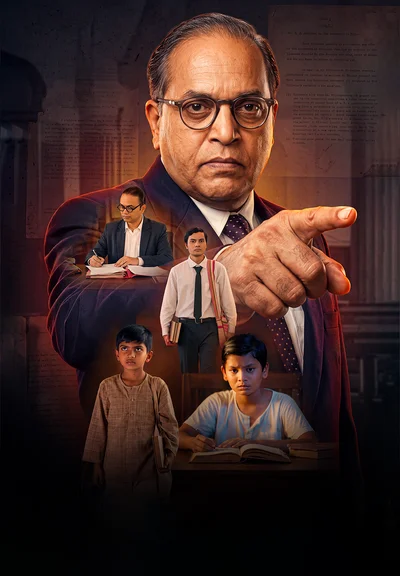
The story follows Bhim from childhood into adulthood as he grows up under the pressure of caste exclusion, poverty, and family duty. It begins with a public anti-caste struggle at the Chavdar tank, setting the larger fight for dignity that shapes his life. Even as his parents urge him toward education, he is repeatedly humiliated in school and in public spaces, where others enforce separation and impurity rules. The world around him keeps reminding him that learning will not come easily, and that even basic needs like water, food, and respect can be denied. Family hardship deepens the stakes through illness, death, and funeral rituals, showing how social oppression reaches into private grief. Bhim’s resistance grows alongside the support of his parents, relatives, and a few reform-minded allies. A long-awaited invitation and difficult journey to Koregaon briefly shift the mood toward hope, but the trip becomes another test of endurance and discrimination. Along the way, the group is delayed, short of water, and forced to negotiate for help while hiding or defending identity. Bhim also struggles with hidden family tensions, secret labor, and the shame of false accusation, yet he keeps returning to education as his path forward. School remains a battleground, with authorities blocking him from the subjects he wants and trying to redirect his future. At home, his father and other supporters continue to sacrifice so he can study, even when money is scarce. His matriculation success becomes a public victory, but it does not end the conflict between marriage, duty, and learning. As his family debates his future, Bhim insists that education must serve society, not just personal advancement. After graduation, he is pulled toward work in Baroda because the family needs support and his father is weak. That choice leads him through further separation, including a painful farewell and more reminders of duty over desire. His father, even while ill, gives him a book and urges him to learn from life itself. The arc closes with Bhim securing permission to study in America under strict conditions and then appearing as a reform leader calling for dignity, education, and equality.
The story follows Bhim from childhood into adulthood as he grows up under the pressure of caste exclusion, poverty, and family duty. It begins with a public anti-caste struggle at the Chavdar tank, setting the larger fight for dignity that shapes his life. Even as his parents urge him toward education, he is repeatedly humiliated in school and in public spaces, where others enforce separation and impurity rules. The world around him keeps reminding him that learning will not come easily, and that even basic needs like water, food, and respect can be denied. Family hardship deepens the stakes through illness, death, and funeral rituals, showing how social oppression reaches into private grief. Bhim’s resistance grows alongside the support of his parents, relatives, and a few reform-minded allies. A long-awaited invitation and difficult journey to Koregaon briefly shift the mood toward hope, but the trip becomes another test of endurance and discrimination. Along the way, the group is delayed, short of water, and forced to negotiate for help while hiding or defending identity. Bhim also struggles with hidden family tensions, secret labor, and the shame of false accusation, yet he keeps returning to education as his path forward. School remains a battleground, with authorities blocking him from the subjects he wants and trying to redirect his future. At home, his father and other supporters continue to sacrifice so he can study, even when money is scarce. His matriculation success becomes a public victory, but it does not end the conflict between marriage, duty, and learning. As his family debates his future, Bhim insists that education must serve society, not just personal advancement. After graduation, he is pulled toward work in Baroda because the family needs support and his father is weak. That choice leads him through further separation, including a painful farewell and more reminders of duty over desire. His father, even while ill, gives him a book and urges him to learn from life itself. The arc closes with Bhim securing permission to study in America under strict conditions and then appearing as a reform leader calling for dignity, education, and equality.
Babasaheb is a Drama Series in Hindi, streaming on Kuku TV.
Babasaheb has 46 episodes, watched over 269K+ times on Kuku TV.
Babasaheb is available to watch in Hindi on Kuku TV.
Babasaheb was released in 2026 and is streaming on Kuku TV.
Babasaheb is rated U/A 16+.
The cast of Babasaheb includes Anamika Ajitkumar Dangre, Snehalata Siddharth Tagde, Zestful_Innovator521W, Rahoul Mukherjiee, Intake Media, and Leonardo Satchit.
You can watch Babasaheb online on Kuku TV or download the Kuku TV app to start playing. Open any episode above to start watching instantly.