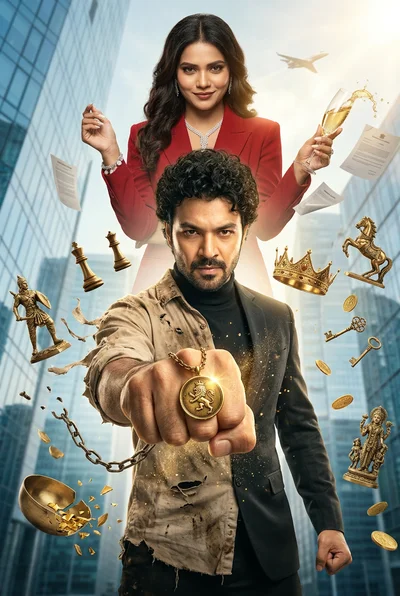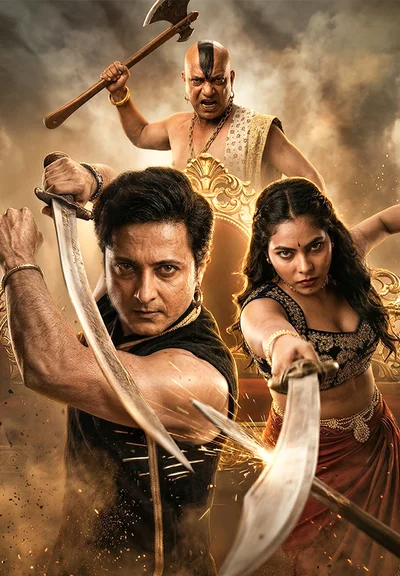
The story follows Aaryaveera as he struggles to uncover the truth of his origins while sacred objects and royal bloodlines keep pointing him toward a destiny he does not fully understand. Early on, he confronts Maha Guru about years of secrecy, and the guidance he receives suggests that Chandramani and other heirlooms are meant to lead him back to family. At the same time, the court is filled with competing claims over lost sons, abandoned infants, and rightful heirs, making identity itself the central conflict. Urmila repeatedly stands at the center of these disputes, defending the humiliated and the vulnerable, and her courage draws royal attention as well as danger. Elanjan is pulled into this larger struggle after rescuing Urmila and revealing his own abandoned-orphan past, which opens a search for his parents and place in the royal order. Elsewhere, mothers such as Kunti and another queen plead for recognition of sons who have been denied by authority, but rulers repeatedly refuse or delay the truth. The palace tensions grow sharper as princes and maharajas clash over legitimacy, with Nakul Veer, Maharaja Chandradheep, and others asserting power while others challenge their judgments. Mani and the cowherd-like humble figures become symbols of hidden lineage, as family bonds are hinted at but not fully accepted. In parallel, Arya Veera and Ashoka are tested through public suspicion, impossible feats, and challenges to prove who they really are. Reports that Arya Veera split the sacred Nandi stone and later the Kaaliyasthram conflict make him both celebrated and doubted. The story also widens into battlefield politics, where Bindusara openly challenges the ruler and the conflict expands into questions of women’s dignity, throne control, and who deserves to lead. Gurudev and other moral figures defend honor and warn of hidden enemies, while darker forces pursue sacred weapons and forbidden power. A forbidden ritual, soul sacrifice, and the search for the Kaali Astram raise the stakes from court dispute to mythic war. Through all of this, Aaryaveera is repeatedly pushed to prove that power cannot simply be taken, because the greater weapon chooses its rightful wielder. By the end, he emerges as a warrior-king whose authority is publicly recognized, even as mercy, justice, and unresolved family truths remain part of his burden. The show closes with his identity and destiny affirmed in public, but the emotional wounds around lineage, abandonment, and rightful belonging still shape the world around him.
The story follows Aaryaveera as he struggles to uncover the truth of his origins while sacred objects and royal bloodlines keep pointing him toward a destiny he does not fully understand. Early on, he confronts Maha Guru about years of secrecy, and the guidance he receives suggests that Chandramani and other heirlooms are meant to lead him back to family. At the same time, the court is filled with competing claims over lost sons, abandoned infants, and rightful heirs, making identity itself the central conflict. Urmila repeatedly stands at the center of these disputes, defending the humiliated and the vulnerable, and her courage draws royal attention as well as danger. Elanjan is pulled into this larger struggle after rescuing Urmila and revealing his own abandoned-orphan past, which opens a search for his parents and place in the royal order. Elsewhere, mothers such as Kunti and another queen plead for recognition of sons who have been denied by authority, but rulers repeatedly refuse or delay the truth. The palace tensions grow sharper as princes and maharajas clash over legitimacy, with Nakul Veer, Maharaja Chandradheep, and others asserting power while others challenge their judgments. Mani and the cowherd-like humble figures become symbols of hidden lineage, as family bonds are hinted at but not fully accepted. In parallel, Arya Veera and Ashoka are tested through public suspicion, impossible feats, and challenges to prove who they really are. Reports that Arya Veera split the sacred Nandi stone and later the Kaaliyasthram conflict make him both celebrated and doubted. The story also widens into battlefield politics, where Bindusara openly challenges the ruler and the conflict expands into questions of women’s dignity, throne control, and who deserves to lead. Gurudev and other moral figures defend honor and warn of hidden enemies, while darker forces pursue sacred weapons and forbidden power. A forbidden ritual, soul sacrifice, and the search for the Kaali Astram raise the stakes from court dispute to mythic war. Through all of this, Aaryaveera is repeatedly pushed to prove that power cannot simply be taken, because the greater weapon chooses its rightful wielder. By the end, he emerges as a warrior-king whose authority is publicly recognized, even as mercy, justice, and unresolved family truths remain part of his burden. The show closes with his identity and destiny affirmed in public, but the emotional wounds around lineage, abandonment, and rightful belonging still shape the world around him.
Arya Veeran is a Mythology Series in Tamil, streaming on Kuku TV.
Arya Veeran has 42 episodes, watched over 151K+ times on Kuku TV.
Arya Veeran is available to watch in Tamil on Kuku TV.
Arya Veeran was released in 2026 and is streaming on Kuku TV.
Arya Veeran is rated A.
The cast of Arya Veeran includes Sonia, Rithika, and Thayumanava Productions.
You can watch Arya Veeran online on Kuku TV or download the Kuku TV app to start playing. Open any episode above to start watching instantly.